


Translational Science Benefits




Summary
As tick populations increase and spread across the United States, the viruses and bacteria they carry are also on the rise.1 This increasingly makes tick-borne diseases a major public health concern as more people and animals in more states become at risk. Ticks usually survive in warmer temperatures, so sustained increases in global winter temperatures both expand the geographic habitat for ticks and extend their active season.2 Ticks reproduce when feeding on large mammals. When large mammal populations change or move, like an increasing deer population, tick populations may grow. An increasing abundance of ticks paired with longer active seasons, creates more opportunities to infect people and other animals.
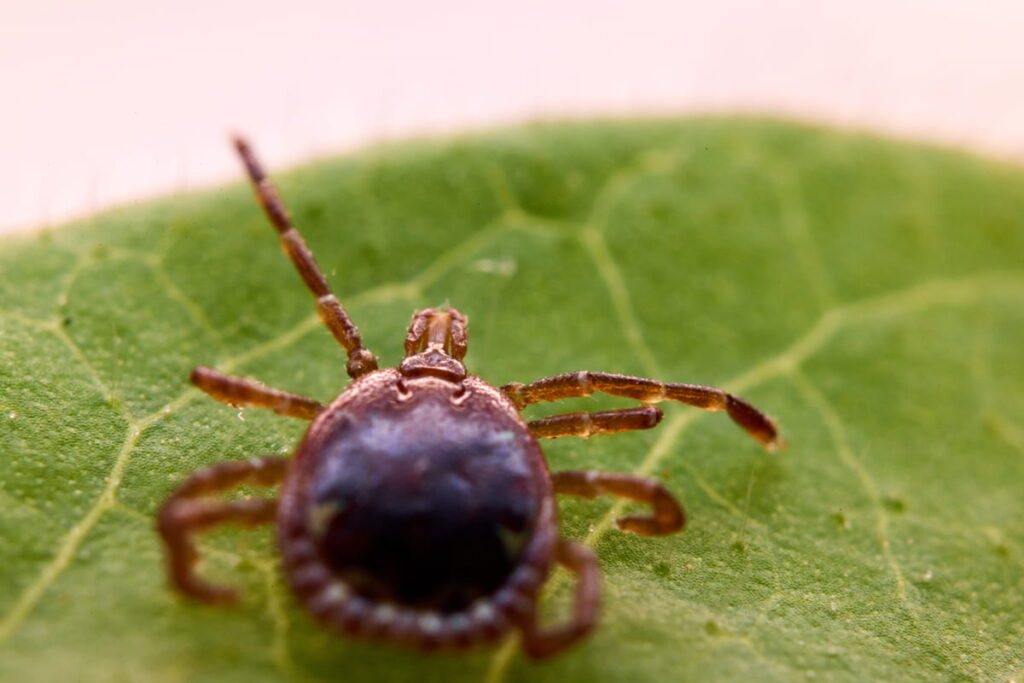
The lone star tick is a common tick species that has long thrived in the Southeast, Midwest, and Eastern parts of the United States, but is expanding north- and westward.3,4 Its bite can cause a range of different diseases in humans and animals. These include two emerging tick-borne viruses, Bourbon virus and Heartland virus, which are posing new health threats in the Midwest.5–8 Symptoms of lone star tick diseases depend on the specific illness, but can include fever, fatigue, muscle pain, rash, and nausea or diarrhea. In severe cases, Bourbon and Heartland viruses can cause disease that leads to hospitalization or even death.9 Supportive therapies may alleviate symptoms, however, there is currently no FDA-approved treatment or vaccine for either of the viruses. The lack of a clear treatment path, as well as the lack of routine clinical diagnostic tests for these viruses, can lead to more patient suffering and greater health care costs. Because there is limited understanding of these emerging viruses, scientists have a hard time developing effective strategies to prevent infections and treat them. As tick-borne diseases continue to emerge and spread, we need ongoing research and funding to identify, understand, and counter these diseases.
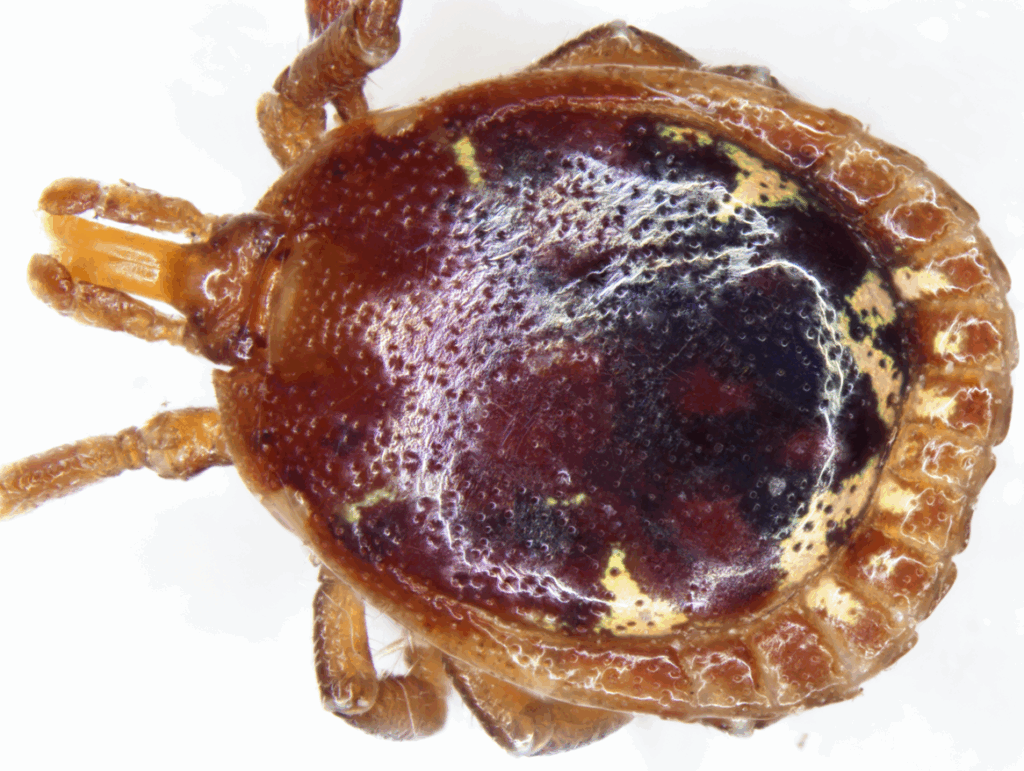
Our multidisciplinary One Health team at Washington University in St. Louis strives to understand and address emerging tick-borne diseases. The team tracks these viruses in tick, animal, and human populations across Missouri, North Carolina, and the Midwest.9 Mapping the spread of these viruses in ticks can help identify areas at greater risk and predict potential outbreaks to guide public health efforts. We are also testing people and animal blood samples to learn more about risk and exposure to these viruses.10–13 This testing has revealed that Bourbon virus infection is much more common than previously thought. Our team is developing countermeasures, such as vaccines, monoclonal antibodies, and antiviral drugs, to prevent and treat tick-borne virus infections.14 This has involved isolating Bourbon virus from a fatal human case to develop pre-clinical models that can be used to better understand the virus and test new interventions.14 We are also performing structural analysis of the viral envelope protein, and we identified the first essential host factor required for replication of Bourbon virus in human cells.15
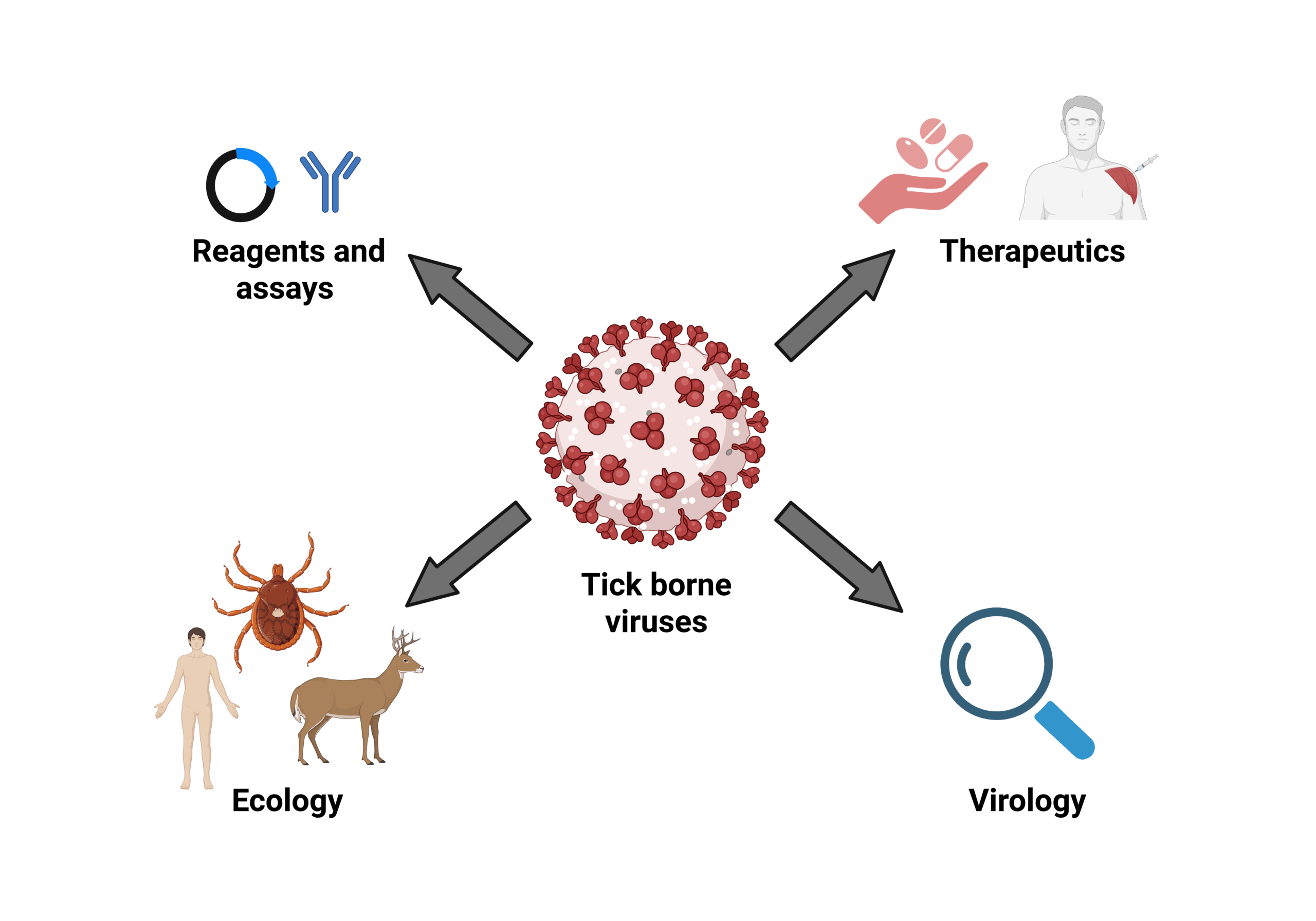
Through ongoing research and community involvement, we aim to continue our efforts to better understand how tick-borne viruses emerge, spread, and infect people and animals, and to develop countermeasures to prevent and treat ongoing infections. Another goal is to identify the animal species that can serve as reservoirs. These are animals that harbor the virus, often without getting sick, and can pass it on to feeding ticks. We also aim to characterize the habitat conditions that promote interactions between reservoir hosts and ticks, thereby increasing virus transmission. This information could be essential for developing effective countermeasures against emerging tick-borne diseases.
Significance
Our research benefits multiple fields, including virology, epidemiology, disease ecology, and public health, by providing key insights and tools to combat tick-borne viruses that threaten wildlife conservation and human health. We have published tick and virus data from the St. Louis region and shared it with state public health practitioners. Our pre-clinical model of Bourbon virus has allowed us to better understand the virus and test new interventions,14 contributing to the development of potential drug therapies, monoclonal antibodies, and vaccines. These developments have immense potential to protect communities, particularly in high-risk areas, and improve health outcomes on a local, national, and global scale.
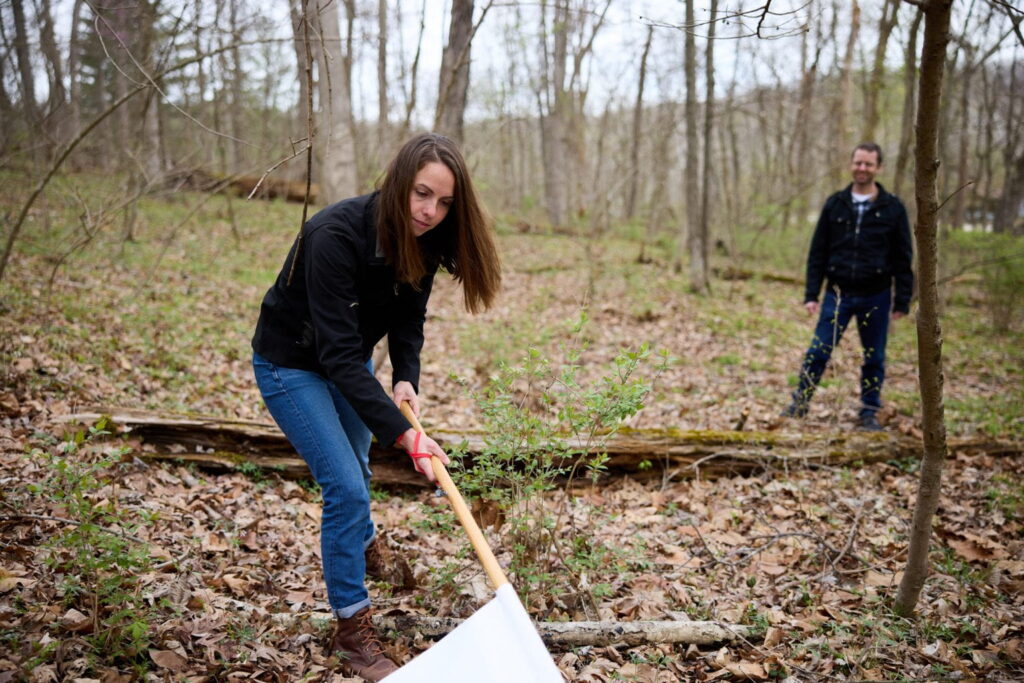
This work directly benefits priority populations in the St. Louis area, where there is significant risk. Moreover, our guiding framework, One Health, promotes a collaborative and multisectoral approach that aligns human health with environmental and animal health to achieve healthier communities for all.
Key Discoveries:
- Up to 1 in 150 Lone Star ticks carry Bourbon virus or Heartland virus in peri‑urban St. Louis sites, and this fluctuates annually.9
- Discovery of human and animal Bourbon and Heartland virus infections in the St Louis metropolitan area.13
- Created a small animal Bourbon virus infection model to study the effects of the disease and to test new treatments.14
- Favipiravir and molnupiravir prevent Bourbon virus mortality even when given three days after infection, suggesting they could be useful for treatment.14,16
- Five of ~1,500 community plasma samples contain neutralizing antibodies, revealing silent human infections.
- mRNA vaccine platform shows complete protection against Bourbon virus in mice.
- Neutralizing monoclonal antibodies protect against Bourbon virus in mice, suggesting they could be used as therapeutics.
- Discovery and identification of the invasive Asian longhorned tick in St Louis County.
These discoveries represent significant strides towards understanding, preventing, and treating Bourbon and Heartland virus, with far-reaching implications for public health and health equity.
Benefits
Demonstrated benefits are those that have been observed and are verifiable.
Potential benefits are those logically expected with moderate to high confidence.
Clinical & medical benefits
Developed robust mouse model that replicates Bourbon virus infection, enabling translational testing. demonstrated.
Community & public health benefits
Mapped tickborne virus hotspots in Tyson Research Center to guide research questions and secure funding to map additional areas. demonstrated.
Developed serological assays to diagnose Bourbon and Heartland virus infections in humans and animals. demonstrated.
Detected community exposure through serology, prompting awareness on tick safety. demonstrated.
Economic benefits
This research has clinical, community, economic, and policy implications. The framework for these implications was derived from the Translational Science Benefits Model created by the Institute of Clinical & Translational Sciences at Washington University in St. Louis.17
Clinical
The isolation and characterization of Bourbon virus from a human case in St. Louis has laid the foundation for developing assays and animal models to study this virus and its ability to cause infection and disease in hosts, and to develop and test antiviral countermeasures.14 Our research efforts in this area have focused on three distinct ways to prevent and treat this potentially life-threatening disease. We found that antiviral drugs for related RNA viruses, favipiravir and molnupiravir, that block the replication machinery of the virus, can be effective in inhibiting virus replication and severe disease in pre-clinical animal models. We have also showed that a Bourbon virus vaccine expressing the virus surface protein is highly effective at inducing virus neutralizing antibodies in serum and that it can protect against infection. Finally, monoclonal antibodies targeting the surface protein of BRBV have been identified that can be used to prevent and treat an ongoing infection with BRBV in our animal model. This important research has many implications. First, we have a better understanding of how to combat BRBV infections with our animal model. With these findings, we can work towards therapies for humans in the clinic. Our findings may be most important for future clinical trials that study potential treatments for BRBV infections.
Community
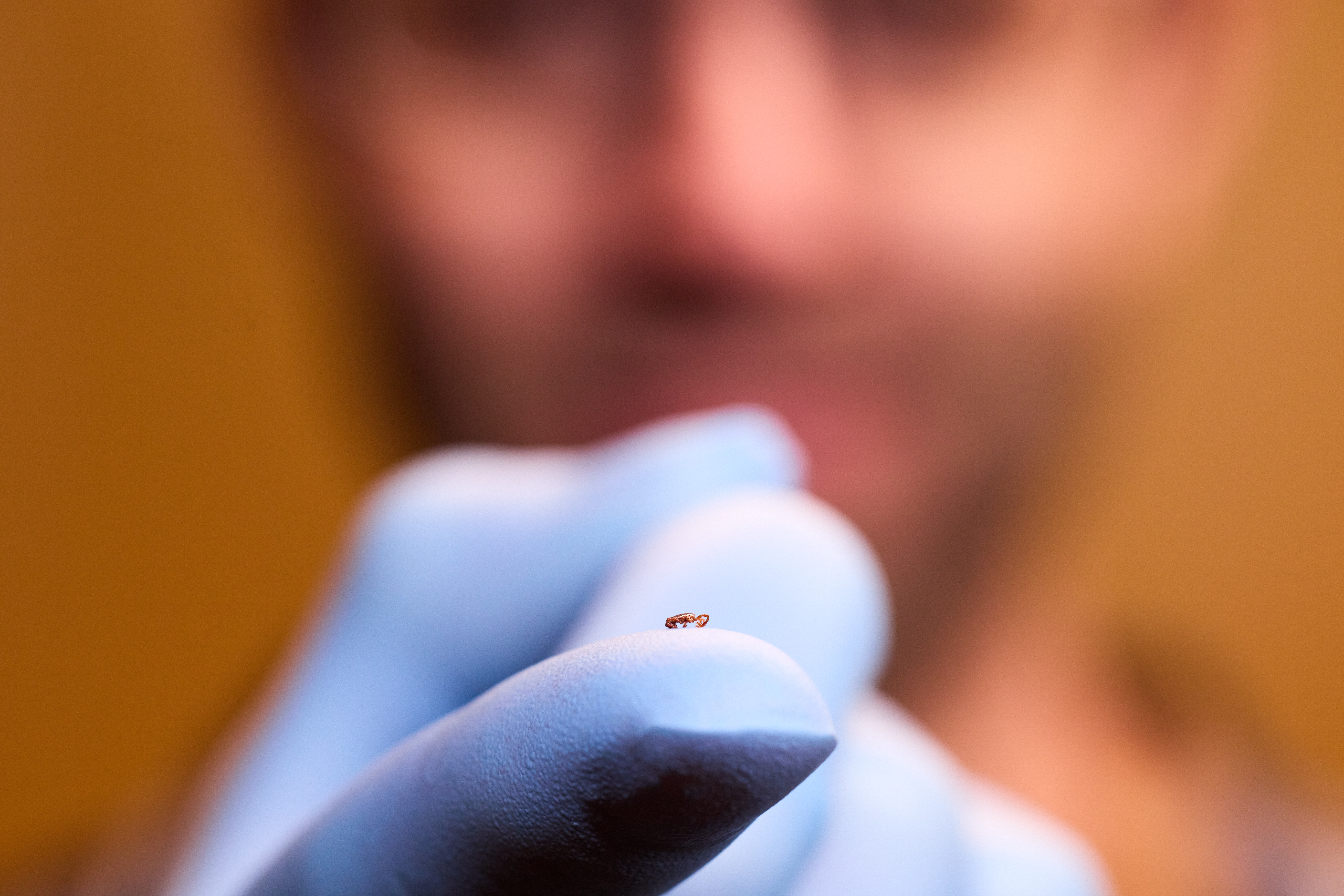
Our efforts in developing antiviral therapies, like molnupiravir, vaccines, and antiviral monoclonal antibodies, will improve our ability to treat infected patients and increase their chances of survival after Bourbon virus infection. Our studies on ticks, tick-borne viruses, and associated human and animal infections in the St. Louis Area have increased awareness of this among the public, public health officials, and clinicians in St. Louis and St. Louis County. This awareness was further enhanced by the discovery of the invasive Asian longhorned tick, which is a likely host for Bourbon and Heartland virus. Future studies will investigate how this new tick species could impact the spread and transmission risk of tick-borne viruses.
Economic
The development of a mRNA vaccine encoding the viral surface protein of Bourbon and related viruses could be licensed to industry partners who are interested in developing tick-borne disease-based vaccines. Similarly, the generation of effective monoclonal antibodies that can prevent and treat ongoing Bourbon virus infections can be licensed to companies that specialize in monoclonal antibody therapies. Finally, the structural characterization of the virus surface protein and development of a stabilized antigen for vaccines could be licensed to companies for future development of vaccines against Bourbon virus and related viruses in the same virus family.
Lessons Learned
The One Health approach, combining disciplines like tick ecology, virology, human and animal health, modeling, and communications, is essential for understanding and solving complex ecological questions related to emerging and re-emerging viruses such as Bourbon and Heartland virus. The isolation of Bourbon virus from a human, combined with researchers at WashU Medical School, Tyson Research Center, a WashU’s environmental field station, and the St. Louis Zoo [Dr. Sharon Deem], has enabled this collaborative effort and has resulted in numerous key discoveries that will change how tick-borne infections are diagnosed, treated, and communicated, to ultimately save human lives.
- Pomarico-Denino V. The rising threat of tickborne infections: A growing public health concern. Nurse Pract. 2025;50(7):13-23. doi:10.1097/01.NPR.0000000000000330
- Bouchard C, Dibernardo A, Koffi J, Wood H, Leighton P, Lindsay L. N Increased risk of tick-borne diseases with climate and environmental changes. Can Commun Dis Rep. 2019;45(4):83-89. doi:10.14745/ccdr.v45i04a02
- Dupuis AP, Lange RE, Ciota AT. Emerging tickborne viruses vectored by Amblyomma americanum (Ixodida: Ixodidae): Heartland and Bourbon viruses. J Med Entomol. 2023;60(6):1183-1196. doi:10.1093/jme/tjad060
- Shah T, Li Q, Wang B, Baloch Z, Xia X. Geographical distribution and pathogenesis of ticks and tick-borne viral diseases. Front Microbiol. 2023;14:1185829. doi:10.3389/fmicb.2023.1185829
- Roe MK, Huffman ER, Batista YS, et al. Comprehensive Review of Emergence and Virology of Tickborne Bourbon Virus in the United States. Emerg Infect Dis. 2023;29(1):1-7. doi:10.3201/eid2901.212295
- Kosoy OI, Lambert AJ, Hawkinson DJ, et al. Novel thogotovirus associated with febrile illness and death, United States, 2014. Emerg Infect Dis. 2015;21(5):760-764. doi:10.3201/eid2105.150150
- Savage HM, Godsey MS, Lambert A, et al. First detection of heartland virus (Bunyaviridae: Phlebovirus) from field collected arthropods. Am J Trop Med Hyg. 2013;89(3):445-452. doi:10.4269/ajtmh.13-0209
- McMullan LK, Folk SM, Kelly AJ, et al. A new phlebovirus associated with severe febrile illness in Missouri. N Engl J Med. 2012;367(9):834-841. doi:10.1056/NEJMoa1203378
- Aziati ID, Jnr DM, Antia A, et al. Prevalence of Bourbon and Heartland viruses in field collected ticks at an environmental field station in St. Louis County, Missouri, USA. Ticks Tick-Borne Dis. 2023;14(1):102080. doi:10.1016/j.ttbdis.2022.102080
- Zychowski DL, Bamunuarachchi G, Commins SP, Boyce RM, Boon ACM. Evidence of Human Bourbon Virus Infections, North Carolina, USA. Emerg Infect Dis. 2024;30(11):2396-2399. doi:10.3201/eid3011.240499
- Valdez K, Aguilar PV, Fernandez D, et al. Surveillance for Serological Evidence of Bourbon and Heartland Virus Infection in White-Tailed Deer and Feral Swine in Texas. Vector Borne Zoonotic Dis Larchmt N. 2025;25(4):295-302. doi:10.1089/vbz.2024.0107
- Bamunuarachchi G, Najera F, Aziati ID, et al. Serosurveillance Identifies Bourbon Virus-Neutralizing Antibodies in Bobcats, Coyotes, and Red Foxes in Missouri. Vector Borne Zoonotic Dis Larchmt N. 2025;25(4):287-294. doi:10.1089/vbz.2024.0076
- Bamunuarachchi G, Harastani H, Rothlauf PW, et al. Detection of Bourbon Virus-Specific Serum Neutralizing Antibodies in Human Serum in Missouri, USA. mSphere. 2022;7(3):e0016422. doi:10.1128/msphere.00164-22
- Bricker TL, Shafiuddin M, Gounder AP, et al. Therapeutic efficacy of favipiravir against Bourbon virus in mice. PLoS Pathog. 2019;15(6):e1007790. doi:10.1371/journal.ppat.1007790
- Zhang Z, Aziati ID, Nipper T, Boon ACM, Mehle A. ANP32 proteins from ticks and vertebrates are key host factors for replication of Bourbon virus across species. J Virol. 2025;99(6):e0052225. doi:10.1128/jvi.00522-25
- Bamunuarachchi G, Zhao FR, Bricker TL, et al. Molnupiravir inhibits Bourbon virus infection and disease-associated pathology in mice. J Virol. 2025;0(0):e00740-25. doi:10.1128/jvi.00740-25
- Luke DA, Sarli CC, Suiter AM, et al. The Translational Science Benefits Model: a new framework for assessing the health and societal benefits of clinical and translational sciences. Clin Transl Sci. 2018;11(1):77-84. doi:10.1111/cts.12495