

TSBM Leads Impact Dialogue at National Summit
Team members from WashU’s Translational Science Benefits Model (TSBM) and their colleagues presented a panel session at the recent Translational Impact Summit, a two-day virtual event held March 2 & 3, 2026, and hosted by the National Center for Advancing Translational Sciences Clinical and Translational Science Awards Program (NCATS CTSA) Translational Impact Working Group. The “TSBM State of the Science panel” was facilitated by TSBM manager Anna La Manna, MPH, MSW, and included panelists Douglas Luke, Distinguished Professor in Public Health Systems Science at the WashU School of Public Health; Pamela Davidson, PhD, from UCLA Clinical & Translational Science Institute; and Joe Hunt, MPH, from Indiana Clinical & Translational Sciences Institute. All four presenters co-edited the recent Frontiers in Public Health collection, Impact Evaluation using the Translational Science Benefits Model Framework in the National Center for Advancing Translational Science Clinical and Translational Science Award Program. View the Frontiers collection. Read a news story about the collection.
Panelists reflected on the twelve articles in the Frontiers collection—which were written by more than 60 co-authors from various CTSA hubs—and shared takeaways, lessons learned, and future implications. They discussed broad application of the TSBM across the CTSA consortium and highlighted the opportunity to foster a shared understanding of impact. They emphasized the need to develop more impact-oriented data sources and to integrate methods from other fields such as communications, health economics, and implementation science.
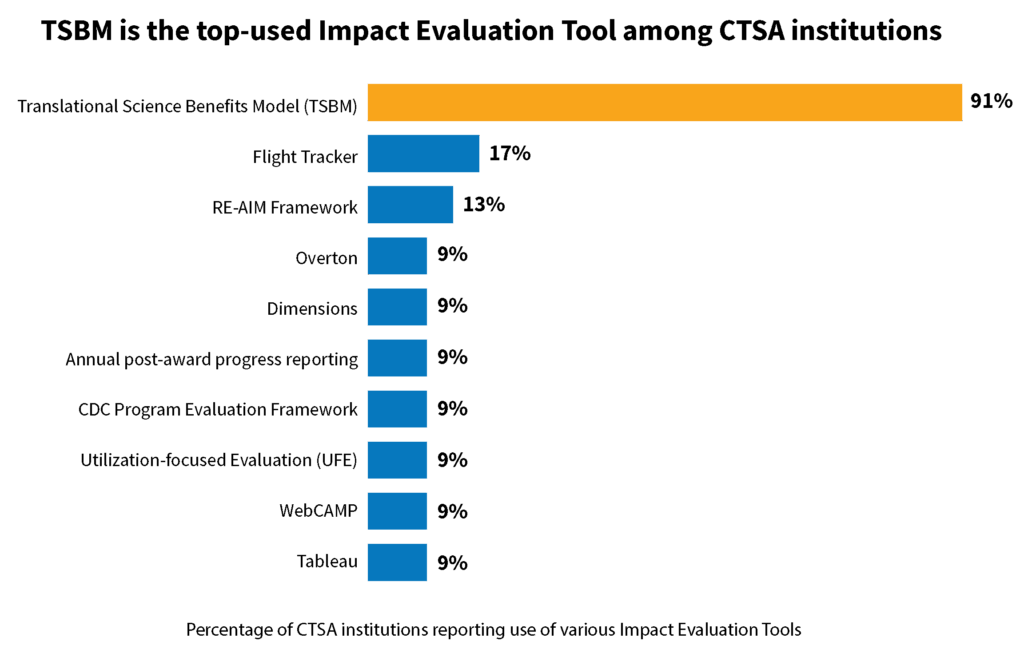
In another session, “Opportunities for Alignment in Impact Measurement Across CTSA Consortium,” researchers from Penn State University, Indiana University, and Case Western Reserve University’s CTSAs shared data on the leading impact evaluation tools used by CTSA hubs. As of February 2026, a remarkable 91% (21 out of 23 institutions) reported using the TSBM for evaluation. Hubs also reported using a blend of traditional research tools and specialized evaluation methods.
The Translational Impact Summit was co-chaired by TSBM team member Emmanuel Tetteh, MD, PhD, Research Assistant Professor at the WashU School of Public Health, and Amelia Bucek, MPH, from Northwestern University Clinical and Translational Sciences Institute. The summit hosted 439 unique attendees over two days, featuring speakers from 19 CTSAs, NCATS, public health departments, and community organizations. Attendees viewed 22 virtual posters and participated in a three-part modified Delphi study to achieve a consensus on strategic priorities for translational impact measurement, support, and dissemination. Key priorities identified included embedding impact planning throughout the lifecycle and enhancing communication of translational research outcomes.
Tetteh, who led Day 1, highlighted the importance of sharing impact with a broad audience. “Our work is supported by U.S. taxpayers, making it essential that we clearly demonstrate and communicate its impact to the people we serve,” Tetteh said. “Day 1’s theme, Connecting to the Long Arc of Translational Impact, brought together experts, policymakers, and community members to explore future opportunities framed around the domains of the translational science benefit model: clinical, community, economic, and policy impacts.”
Bucek, who led Day 2, stressed the importance of innovation and collaboration among CTSA hubs. “Day 2’s theme, Building Shared Capacity for Translational Impact, aimed to amplify the methods used across the consortium to maximize the impact of our work through planning, implementation, and evaluation. I hope attendees were inspired to try innovative approaches and explore collaboration opportunities with colleagues at other hubs,” Bucek said.