


Translational Science Benefits



Summary
In the midst of the overdose crisis, researchers began examining the critical role of law enforcement in overdose response. Their findings revealed significant gaps: officers were often unaware of life-saving legislation aimed at protecting individuals who use substances and first responders; they expressed deep concerns about occupational exposure to potential harms, like needle-stick injuries; and many lacked the training necessary to respond effectively and safely to overdose incidents. These insights catalyzed efforts to equip law enforcement with the tools, knowledge, and confidence needed to mitigate the overdose crisis.
Thus, the SHIELD (Safety & Health Integration in the Enforcement of Laws on Drugs) training model was created to fill these gaps. At its inception, SHIELD’s goals included addressing officer lack of training, improving community relations, and safeguarding mental and physical well-being of officers. Over the past 20 years the SHIELD Training Initiative has expanded in scope from only law enforcement to also include emergency medical services personnel, firefighters, and behavioral health workers. Through implementation of the strategies provided in the SHIELD training, first responders and behavioral health workers can both protect themselves against the toxic effects of cumulative stress and improve job satisfaction while simultaneously performing new and traditional duties. Further, the SHIELD training provides practical tools and information to support people who use drugs (PWUD). SHIELD training focuses on increasing knowledge of local resources, and reducing the stigma surrounding them, to promote effective public health actions. The SHIELD model is based on the idea that when first responders and behavioral health workers have the knowledge and resources to provide support to PWUD, and appreciate the benefits of doing so for their own intrinsic interests, they will be more willing to act.1,2
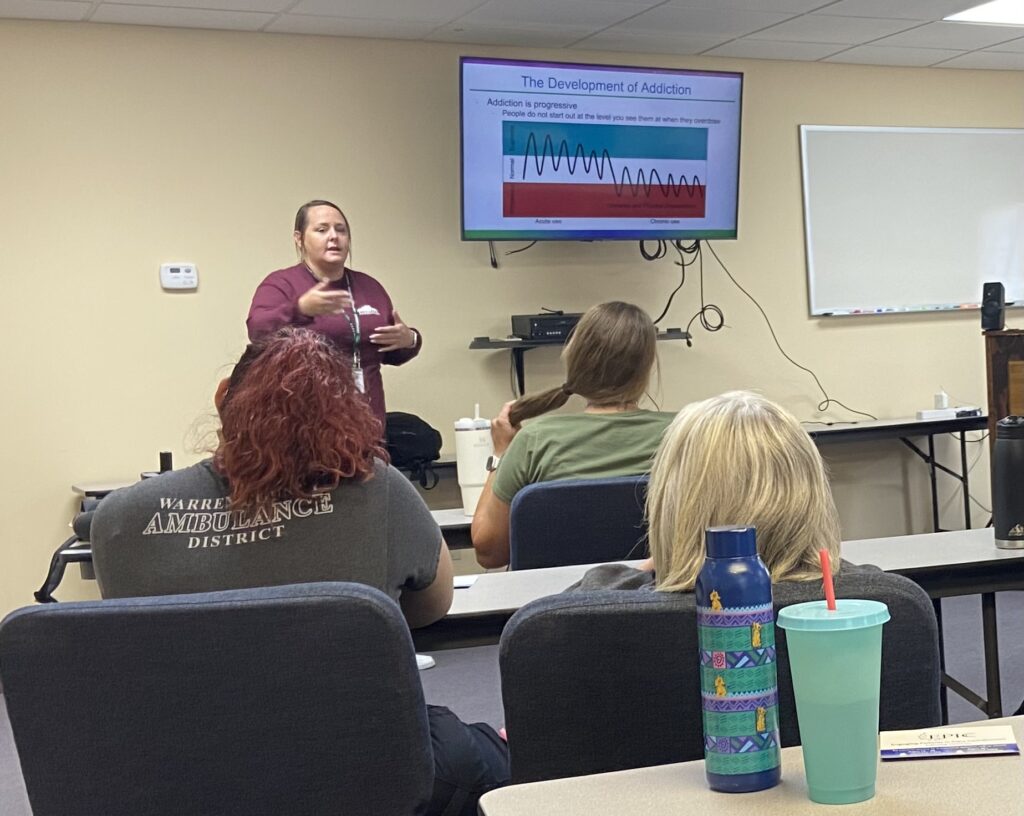
The curriculum enhances trainees’ understanding of the overdose crisis by offering scientifically-backed information on risk factors and protective measures. It also promotes task-shifting to behavioral health specialists in the community. The SHIELD initiative focuses on first responders because they interact often with overdose survivors. With the knowledge of health care and social service networks, first responders can refer overdose survivors to appropriate health care and social service agencies to address the ongoing overdose crisis.3,4 These connections are crucial because they can improve survival odds for overdose survivors in both the short and long term, even reducing the heightened risk of a subsequent overdose following a reversed overdose.4–6
Significance
SHIELD trainings have a proven impact. Over time, improved knowledge from these trainings has been associated with a reduction in syringe confiscation and drug arrests.7 Less syringe confiscation and drug arrests are associated with safer syringe use practices and increased help-seeking from harm reduction services.7,8 Additionally, the trainings are associated with an increased intent to referral,9 improved understanding of drug and syringe possession laws, reduced hepatitis C virus incidence among people who inject drugs,10,11 decreased risky behavior among first responders,11 improved knowledge of fentanyl, reduced fatal overdose, and more positive attitudes among first responders towards harm reduction, PWUD, and medications for opioid use disorder (MOUD).12
Benefits
Demonstrated benefits are those that have been observed and are verifiable.
Potential benefits are those logically expected with moderate to high confidence.
Clinical & medical benefits
Community & public health benefits
Reduced hepatitis C virus incidence among people who inject drugs.10 demonstrated.
Decreased risky behaviors among first responders resulting in prevention of needle stick injury among first responders.11 demonstrated.
Highlighted importance of occupational safety in police training for first responders who interact with PWUD.7 demonstrated.
Reduced arrests associated with syringe possession due to improved knowledge of syringe laws.7 demonstrated.
Improved interactions between law enforcement officers and PWUD, fostering trust and enhancing public health practices. demonstrated.
Decreased negative encounters between law enforcement and PWUD, fostering a more supportive and health-centered approach. demonstrated.
Increased first responder willingness to discuss mental health and openness to seeking mental health help. demonstrated.
Increased first responders’ intention to make referrals for harm reduction services.9 demonstrated.
Increased referrals to harm reduction or treatment services by first responders after overdose response.14 demonstrated.
Improved efficiency of training uptake through customizing the curriculum to the local landscape, enhancing the effectiveness of health care delivery and ensuring better service outcomes. demonstrated.
Improved training effectiveness through peer-to-peer design, enhancing health care delivery by equipping first responders with more relevant and impactful skills. demonstrated.
Improved access to health education resources related to range of resources tailored for first responders, criminal justice personnel, and behavioral health professionals. demonstrated.
Economic benefits
Reduced costs associated with policing practices by utilizing a structural intervention that aligned policing practices and human rights-based public health practices.16 demonstrated.
Policy & legislative benefits
Encouraged the adoption of policies to support naloxone rescues and post-overdose connection to services. demonstrated.
Influenced the development of emergency response policies by improving the preparedness and response of first responders, prioritizing the health and safety of both responders and the individuals they assist. demonstrated.
This research has clinical, community, economic, and policy implications. The framework for these implications was derived from the Translational Science Benefits Model created by the Institute of Clinical & Translational Sciences at Washington University in St. Louis.15
Clinical
The SHIELD Training Initiative significantly advances the clinical and medical domain by enhancing the response to opioid overdoses and improving care for PWUD. Through specialized training, SHIELD equips first responders with critical skills. This includes the proper administration of naloxone, a life-saving medication that rapidly reverses opioid overdoses. The training also emphasizes strategies to maximize officer safety during these encounters and to increase the likelihood of successful referrals to treatment and support services. This approach ensures that life-saving interventions serve as a bridge to long-term care and recovery.
SHIELD emphasizes patient and responder safety by educating first responders on best practices to mitigate occupational hazards, such as needlestick injuries and potential exposure to substances like fentanyl. The training provides scientifically accurate information to dispel misconceptions about incidental fentanyl exposure. By equipping responders with evidence-based knowledge and safety strategies, SHIELD fosters more effective and confident interventions while reducing unnecessary concerns.
Through educating first responders on safer syringe practices, SHIELD also reduces the transmission of infectious diseases like HIV and hepatitis C among people who inject drugs.8,10
Overall, SHIELD’s comprehensive approach to training and collaboration enhances overdose care, improves safety protocols, and supports long-term recovery, making a transformative impact on the clinical and medical domain.
Community
The SHIELD Training Initiative makes a transformative impact on the community and public health domain by equipping first responders with the knowledge, tools, and strategies to address the overdose crisis and improve the well-being of PWUD. Through evidence-based training, SHIELD fosters harm reduction, disease prevention, and improved health care delivery, creating measurable benefits for both responders and the communities they serve.
One key achievement of SHIELD is reducing the incidence of hepatitis C and other infectious diseases among PWUD by promoting safer syringe practices and encouraging referrals to harm reduction services. The program also addresses occupational hazards for first responders, such as needlestick injuries, by reinforcing safety protocols and evidence-based risk assessments. Training helps lower inflated risk perceptions, which can improve officer decision-making, reduce unnecessary syringe confiscation, and ultimately support public health efforts to prevent disease transmission.
SHIELD enhances access to care by increasing first responders’ intentions and actions to connect individuals to harm reduction and treatment services after overdose events.9 For example, improved knowledge of syringe laws has led to a reduction in arrests for syringe possession, breaking down barriers to care and fostering trust between first responders and PWUD.7 This trust-building approach supports systemic public health goals, such as reducing stigma, promoting long-term health engagement, and fostering a more supportive, health-centered approach to law enforcement. These changes reflect a broader shift toward a public health-oriented approach to substance use, demonstrating the power of training and education in reshaping public health responses.
Additionally, the initiative strengthens the public health system by providing tailored health education resources to first responders, criminal justice personnel, and behavioral health professionals. By bridging gaps in knowledge and fostering interdisciplinary collaboration, SHIELD promotes a more coordinated and compassionate response to the needs of vulnerable populations.
Beyond immediate health benefits, SHIELD supports responder well-being by enhancing effectiveness, engagement, and resilience through targeted training. By reducing burnout and promoting mental health, the program helps first responders better serve their communities while sustaining their own well-being.
In summary, SHIELD’s comprehensive, evidence-based approach improves public health practices, reduces barriers to care, prevents disease, and enhances the safety and well-being of both first responders and PWUD. The program exemplifies how translational science can drive systemic improvements in community health and resilience.
Economic
SHIELD has shown cost-saving potential by improving workforce resilience and reducing burnout among first responders. By addressing mental health and well-being, SHIELD helps maintain a healthy and effective workforce, preventing the costly repercussions of high turnover rates or absenteeism due to job-related stress. Additionally, the initiative reduces the social and financial costs of illness by intervening early in substance use disorders, preventing more serious health complications down the road.16 SHIELD also contributes to cost savings through its impact on overdose response. By improving the effectiveness of first responders’ actions and optimizing the use of limited community resources, SHIELD helps reduce emergency medical interventions, hospitalizations, and related health care costs. Furthermore, SHIELD’s harm reduction training helps decrease drug-related arrests, leading to cost savings for law enforcement agencies. The promotion of safer syringe practices helps curb the spread of infectious diseases like HIV and hepatitis C, yielding long-term public health cost savings. SHIELD also strengthens public health infrastructure by increasing referrals to harm reduction services, further enhancing economic and health benefits.
Policy
The SHIELD Training Initiative may play a transformative role in shaping policy by advancing evidence-based approaches to substance use disorder management and first responder preparedness. By demonstrating the effectiveness of harm reduction strategies, SHIELD has the potential to influence both local and national policies, advocating for public health and safety over punitive measures. Following SHIELD training, local first responder agencies have adopted naloxone-supportive policies. SHIELD’s evidence-backed practices have contributed to the development of standardized best practice guidelines for post-overdose outreach, ensuring consistent and effective protocols across jurisdictions. Additionally, SHIELD advocates for comprehensive first responder training programs, which could be mandated or incentivized at the national level, helping to foster a coordinated, treatment-oriented response to substance use disorders that aligns with broader public health goals.
Lessons Learned
The success of the SHIELD Training Initiative stems from a combination of strategic planning, evidence-based design, and collaborative implementation. Central to its effectiveness is a curriculum grounded in the latest research and clinical guidelines.6 It employs several elements of adult learning theory to maximize the acceptance, attention, retention, and use of the curriculum. The evidence also shows that improved knowledge and practices can reduce stress and burnout while improving public safety. By incorporating harm reduction practices, overdose prevention strategies, and tools to support mental health resilience, the training addresses both immediate and systemic challenges in managing substance use disorders and supporting first responders.
Collaboration across disciplines is another vital factor.
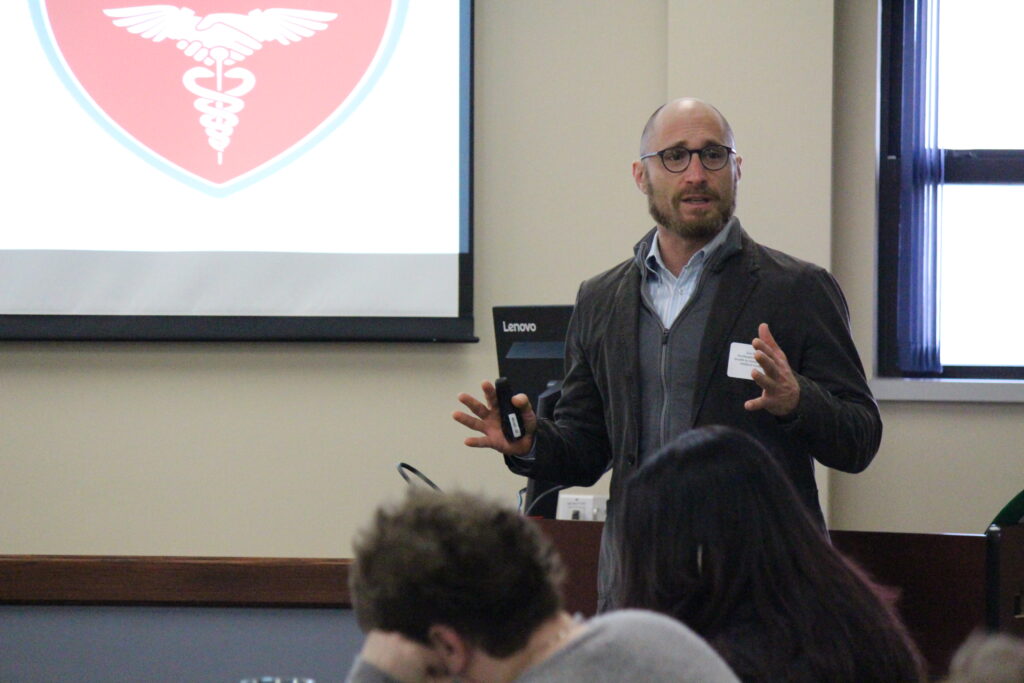
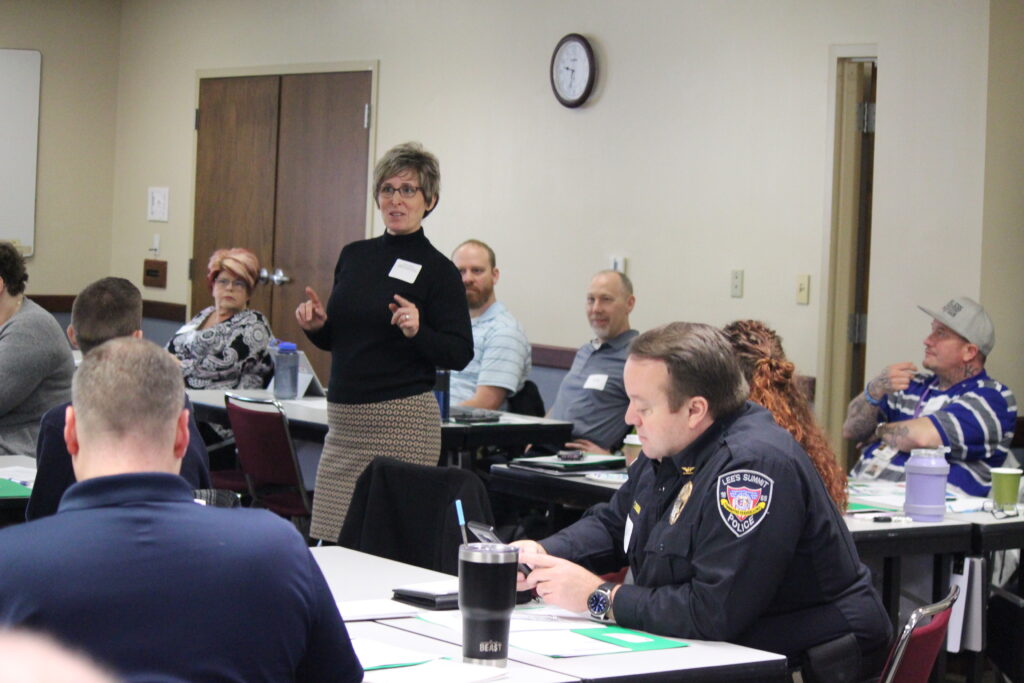
Public health experts, behavioral health specialists, and law enforcement agencies work closely together to design and deliver the training. SHIELD’s skills-based learning is delivered by two trainers, a first responder and a person with lived experience with overdose. This interdisciplinary approach ensures the program is practical, comprehensive, and aligned with the diverse needs of the professionals it serves. Customizing training modules further enhances their relevance, addressing the unique roles and challenges faced by law enforcement officers, fire/EMS personnel, and behavioral health workers. By providing local information and resources, trainees are able to immediately operationalize the SHIELD tools.
A community-centered approach also plays a key role. Engaging stakeholders and incorporating the perspectives of PWUD helps reduce stigma and foster trust between first responders and the communities they serve. This focus on relationship-building bolsters the program’s credibility and effectiveness in addressing public health concerns.
By demonstrating its success, the initiative continues to influence local and state policies that support harm reduction principles and broader public health goals. This systemic focus ensures that the benefits of SHIELD can be scaled and sustained over time.
Regular feedback and evaluation are critical to the program’s ongoing refinement. Participant data, such as increased referrals to care and sustained knowledge improvements, inform iterative updates, ensuring the training remains relevant and effective. Addressing the mental health and well-being of first responders is another cornerstone of the program’s success. By promoting resilience and mitigating burnout, SHIELD supports a motivated and capable workforce better equipped to serve their communities.
These interconnected factors highlight the importance of evidence-driven strategies, collaboration, and a focus on both individual and systemic outcomes in achieving meaningful and measurable public health benefits through initiatives like SHIELD.
- Ajzen I. The theory of planned behavior. Organ Behav Hum Decis Process. 1991;50(2):179-211. doi:10.1016/0749-5978(91)90020-T
- Strathdee SA, Arredondo J, Rocha T, et al. A police education programme to integrate occupational safety and HIV prevention: protocol for a modified stepped-wedge study design with parallel prospective cohorts to assess behavioural outcomes. BMJ Open. 2015;5(8):e008958. doi:10.1136/bmjopen-2015-008958
- Russell C, Ali F, Nafeh F, et al. A qualitative examination of substance use service needs among people who use drugs (PWUD) with treatment and service experience in Ontario, Canada. BMC Public Health. 2021;21:2021. doi:10.1186/s12889-021-12104-w
- Bluthenthal RN. Syringe Exchange as a Social Movement: A Case Study of Harm Reduction in Oakland, California. Subst Use Misuse. 1998;33(5):1147-1171. doi:10.3109/10826089809062212
- Olfson M, Crystal S, Wall M, Wang S, Liu SM, Blanco C. Causes of Death After Nonfatal Opioid Overdose. JAMA Psychiatry. 2018;75(8):820. doi:10.1001/jamapsychiatry.2018.1471
- EVIDENCE BASE. SHIELD Training. Accessed November 4, 2024.
- Baker P, Beletsky L, Garfein R, et al. Impact of SHIELD Police Training on Knowledge of Syringe Possession Laws and Related Arrests in Tijuana, Mexico. Am J Public Health. 2022;112(6):860. doi:10.2105/AJPH.2021.306702
- Baker P, Beletsky L, Avalos L, et al. Policing Practices and Risk of HIV Infection Among People Who Inject Drugs. Epidemiol Rev. 2020;42(1):27. doi:10.1093/epirev/mxaa010
- Siddiqui ST, La Manna A, Connors E, et al. An evaluation of first responders’ intention to refer to post-overdose services following SHIELD training. Harm Reduct J. 2024;21:39. doi:10.1186/s12954-024-00957-4
- Rivera Saldana CD, Abramovitz D, Beletsky L, et al. Estimating the impact of a police education program on hepatitis C virus transmission and disease burden among people who inject drugs in Tijuana, Mexico: A dynamic modeling analysis. Addiction. 2023;11:9. doi: 10.1111/add.16203
- Beletsky L, Abramovitz D, Baker P, et al. Reducing police occupational needle stick injury risk following an interactive training: the SHIELD cohort study in Mexico. BMJ Open. 2021;11(4):e041629. doi:10.1136/bmjopen-2020-041629
- Winograd R, Marotta PL, O’Neil MM, et al. Improving first responders’ perceptions of overdose events and survivors through tailored occupational health-focused training co-facilitated by overdose survivors. Health & Justice. 2024; 12, no. 1 : 49.
- Best Practice Guidance for Post-Overdose Outreach. Boston, MA: Grayken Center for Addiction, Boston Medical Center; www.prontopostoverdose.org. January, 2023.
- Missouri Overdose Field Report. Missouri Institute of Mental Health. https://redcap.mimh.edu/surveys/?s=TWXN4HF48T
- Luke DA, Sarli CC, Suiter AM, et al. The Translational Science Benefits Model: A New Framework for Assessing the Health and Societal Benefits of Clinical and Translational Sciences. Clin Transl Sci. 2018;11(1):77-84.
- Cepeda JA, Beletsky L, Abramovitz D, et al. Cost-effectiveness of a police education program on HIV and overdose among people who inject drugs in Tijuana, Mexico. Lancet Reg Health – Am. 2024;30:100679. doi:10.1016/j.lana.2024.100679